Contemporary economic globalization is the cross-border flow of goods, money, companies, and work. The Bretton Woods Conference of 1944 is a foundation because it created the International Monetary Fund (IMF), which lends money to countries in trouble, and the World Bank, which lends money for projects such as roads, schools, and power. Later agreements, organizations, technologies, and transnational corporations widened those flows.
About 50 min one-to-one, or 60 min with a small group
1. Warm up (5 to 10 min): Ask the quick questions with notes closed.
2. Teach: Work through the lesson slides in order.
3. Coach practice: Use the student examples and try-it tasks.
4. Check: Finish with the outcome prompts below.
Warm-up questions
Where were their shoes made?Listen for: Often another country. This sets up cross-border flows.
Why would countries meet in 1944 to plan the world economy?Listen for: To prevent another depression and rebuild after the war. Listen for reasons.
What is a transnational corporation?Listen for: A company working in many countries. This checks vocabulary.
What to check they understood
3.3
Ask them to describe contemporary economic globalization as flows of goods, money, companies and work.
A strong answer gives one example of each flow and explains how they cross borders.
3.4
Ask them to explain why the 1944 Bretton Woods Conference is a foundation of economic globalization.
A strong answer says it created the International Monetary Fund and the World Bank to keep currencies stable and fund rebuilding.
3.5
Ask them to explain how transnational corporations spread economic globalization.
A strong answer says they move factories, jobs and products across countries, and gives one example.
Likely gaps from earlier grades
Students think economic globalization began with the internet. Point to 1944.
Class slides
Work through the class slides
1 / 8
Trade flows and the 1944 meeting
A pallet of Alberta canola leaves Vancouver for Osaka, and the buyer pays the exporter from a bank in Japan.
In 1944, Allied delegations at Bretton Woods created the International Monetary Fund (IMF), which lends money to countries in trouble.
They also created the World Bank, which lends money for projects such as roads, schools, and power.
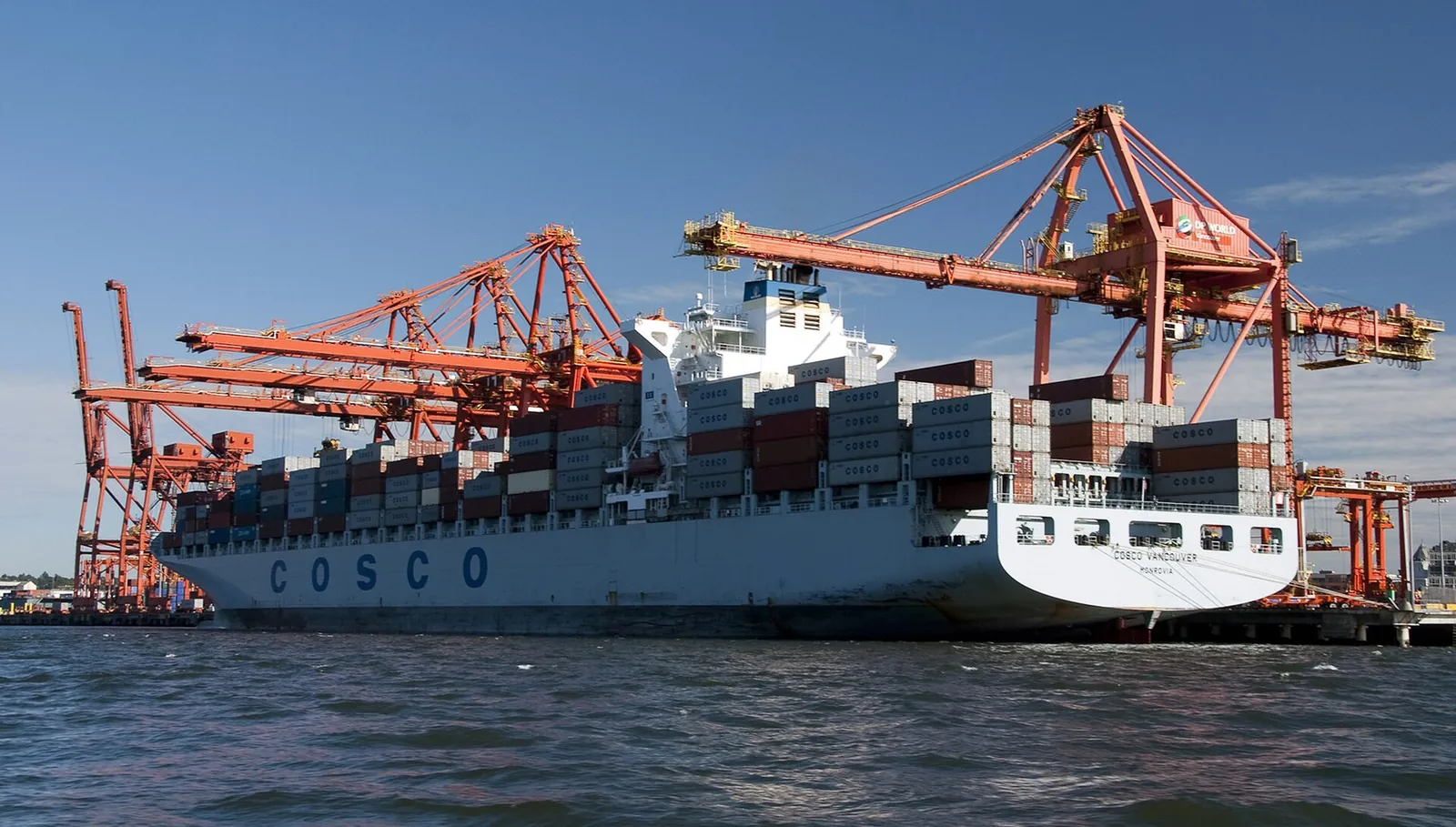
A container ship carries goods in same-size metal boxes from truck to ship to train, which made ocean freight cheaper and faster.
A container ship at a terminal in Vancouver. Alberta canola and many other exports leave Canada in same size steel containers like these. Cranes can lift each box straight onto a train or truck, which cuts the cost of trading with buyers in Asia.