Objects and oral stories
- At a fur trade post, a copper pot and a firearm sit beside a birch canoe and a bag of pemmican.
- In the Mexica capital, maize and cacao meet horses and steel after Spanish arrival in 1519, and Tenochtitlan falls in 1521.
- An elder teaches a place story that a trader's journal tells from a European desk.
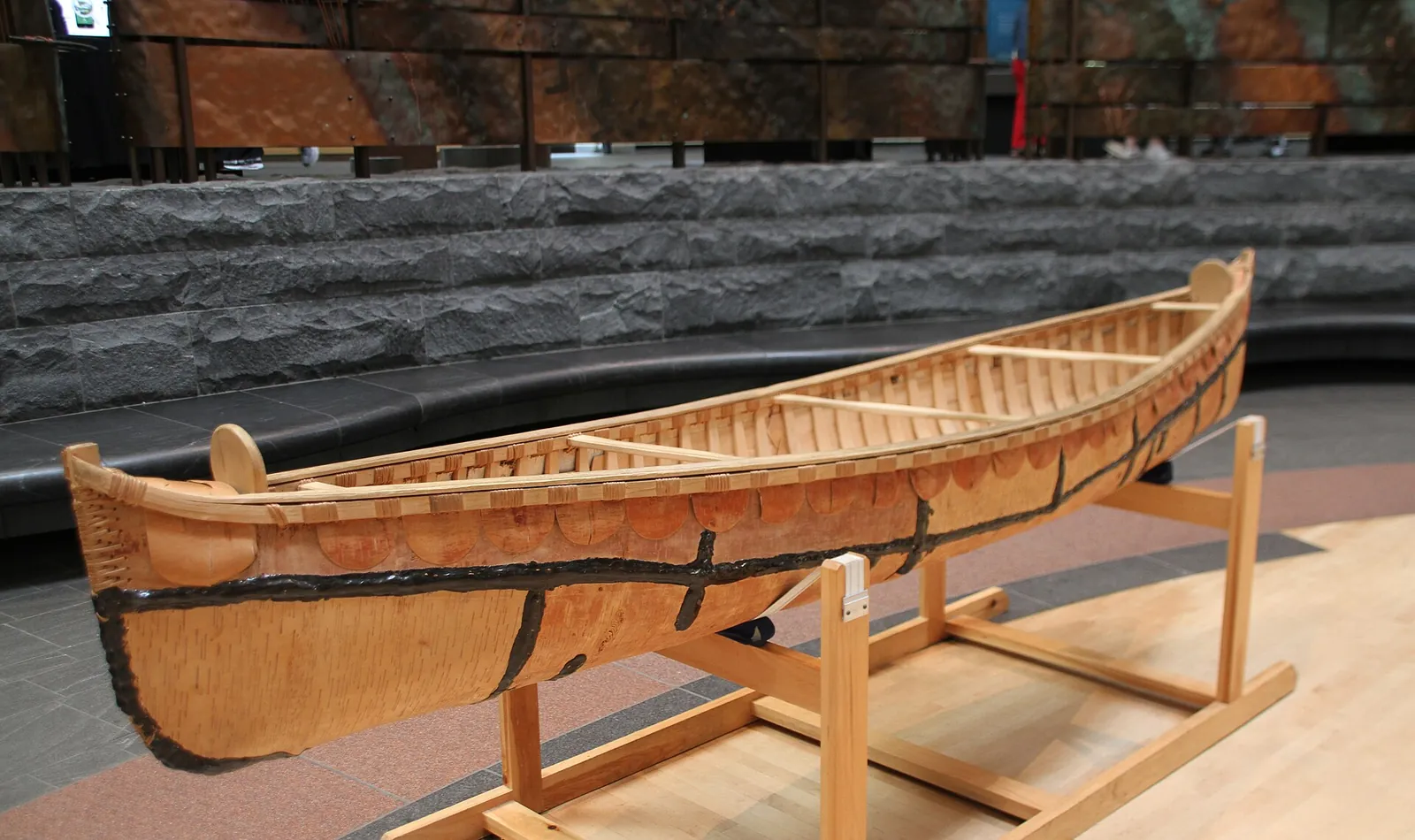
A birchbark canoe in a museum. Indigenous builders made canoes like this from birch bark, cedar, and spruce root. They were light enough to carry around rapids and strong enough to haul furs. That is why European traders adopted them for the inland trade.
Photo: Birch Bark Canoe by Tony Hisgett from Birmingham, UK, Wikimedia Commons, CC BY 2.0