Alberta energy has drawn capital from firms based here and abroad. Wheat, canola, and beef sell abroad when trade rules lower barriers. The free trade agreement between Canada and the United States took effect in 1989, the North American Free Trade Agreement in 1994, and the agreement among Canada, the United States, and Mexico in 2020.
About 50 min one-to-one, or 60 min with a small group
1. Warm up (5 to 10 min): Ask the quick questions with notes closed.
2. Teach: Work through the lesson slides in order.
3. Coach practice: Use the student examples and try-it tasks.
4. Check: Finish with the outcome prompts below.
Warm-up questions
Where do tutors think Alberta sells its canola and beef?Listen for: Many countries, including the United States, China and Japan. Listen for export markets.
What is a tariff?Listen for: A tax on imported goods. This sets up trade barriers.
Why might a company move a call centre to another country?Listen for: Lower costs. This sets up outsourcing.
What to check they understood
3.6
Ask them to explain how the 1989 free trade agreement with the United States affected Alberta exports.
A strong answer says it lowered barriers, helped farm and energy exports, and names one group that gained and one that faced new competition.
S.1
Ask them to weigh one benefit and one cost of foreign investment in Alberta energy.
A strong answer names a benefit like jobs or capital, a cost like profits leaving the province, and gives a supported judgment.
Likely gaps from earlier grades
Students may assume free trade helps everyone equally. Ask who might lose.
Class slides
Work through the class slides
1 / 7
Three Alberta cases
Energy projects in Alberta have drawn capital from Canadian firms and from firms based in other countries.
Wheat, canola, and beef from Alberta farms sell to buyers abroad when trade rules lower barriers.
Accounting, software support, or engineering design for those sectors can be located in Alberta or in another country.
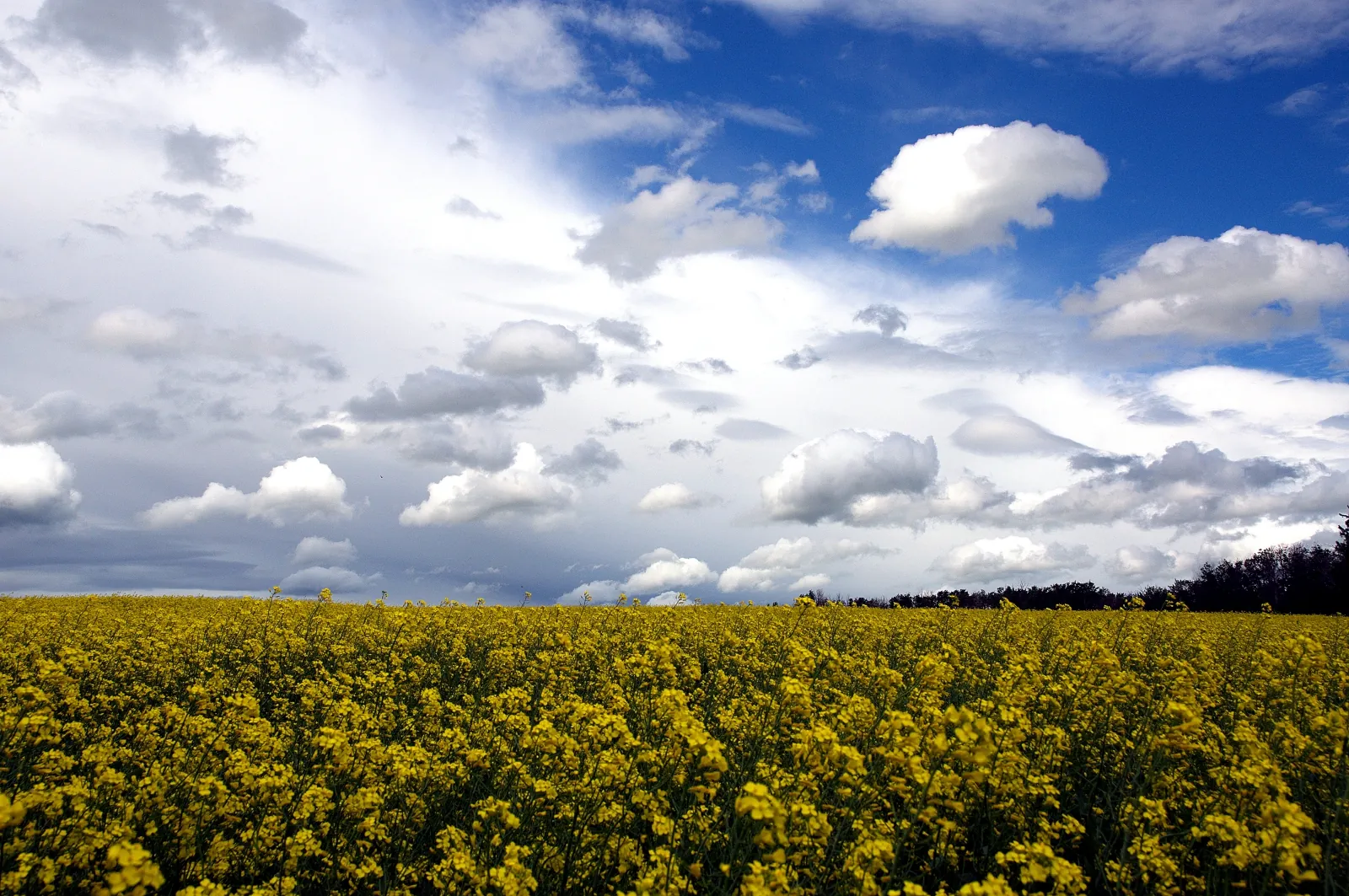
A canola field in bloom in Alberta. Canola seed is crushed for oil and meal, and much of the crop is sold to buyers in other countries. A trade agreement or a tariff decided far away can change the price a farm family gets for this field.