Economic globalization joins production, money, trade, and rules that cross borders. In July 1944, delegates at Bretton Woods designed the International Monetary Fund and the World Bank. Hayek in 1944 and Friedman in 1962 argued about how far a state should direct production.
About 50 min one-to-one, or 60 min with a small group
1. Warm up (5 to 10 min): Ask the quick questions with notes closed.
2. Teach: Work through the lesson slides in order.
3. Coach practice: Use the student examples and try-it tasks.
4. Check: Finish with the outcome prompts below.
Warm-up questions
What happens to prices when many sellers compete?Listen for: Prices tend to fall. This sets up price coordination.
Why would countries want shared rules for money after a world war?Listen for: To keep currencies stable and rebuild. This sets up Bretton Woods.
Should a government control the economy closely or leave markets mostly free?Listen for: Any view. This sets up Hayek and Friedman versus more active government.
What to check they understood
3.3
Ask them to explain what economic globalization joins together across borders.
A strong answer names production, money, trade and rules, and gives an example such as a product made in parts across countries.
3.4
Ask them to describe what the 1944 Bretton Woods meeting created and why.
A strong answer names the International Monetary Fund and the World Bank, and says they aimed for stable money and rebuilding after the war.
S.2
Ask them to compare Hayek and Friedman's view of the state with a view that supports more government action.
A strong answer says Hayek and Friedman wanted limited state control and free markets, contrasts this with a view favouring public programs, and gives one argument for each.
Likely gaps from earlier grades
Students may think economic globalization started recently. Point to Bretton Woods in 1944.
Class slides
Work through the class slides
1 / 7
The 1944 conference
Parts of a phone may be designed in one country, assembled in a second, and sold in a third.
The factory may be funded by capital that crosses a border, under tariff and investment rules.
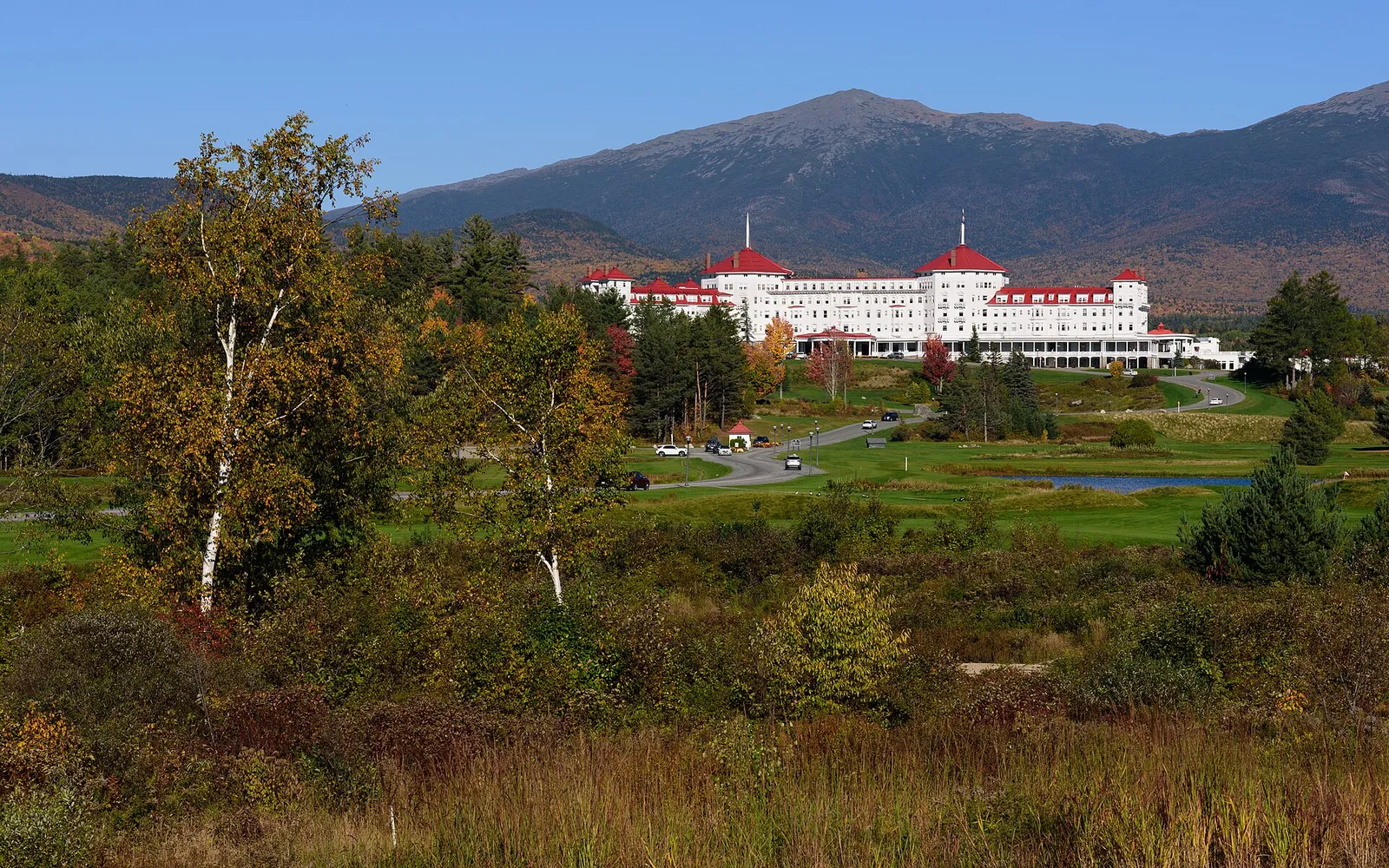
In July 1944, delegates at Bretton Woods, New Hampshire, designed the IMF and the World Bank.
The Mount Washington Hotel in Bretton Woods, New Hampshire. In July 1944, delegates from 44 countries, including Canada, met here and agreed to create the International Monetary Fund and the World Bank. Those rules shaped trade and lending for decades.