Cotton and a mill town
- In the 1800s British mills spun cotton at a scale far beyond a row of hand looms.
- Much of the fibre and much of the later cloth market sat in colonized lands, including India.
- Indian hand weavers lost markets as factory cloth and colonial rules reshaped their trade.
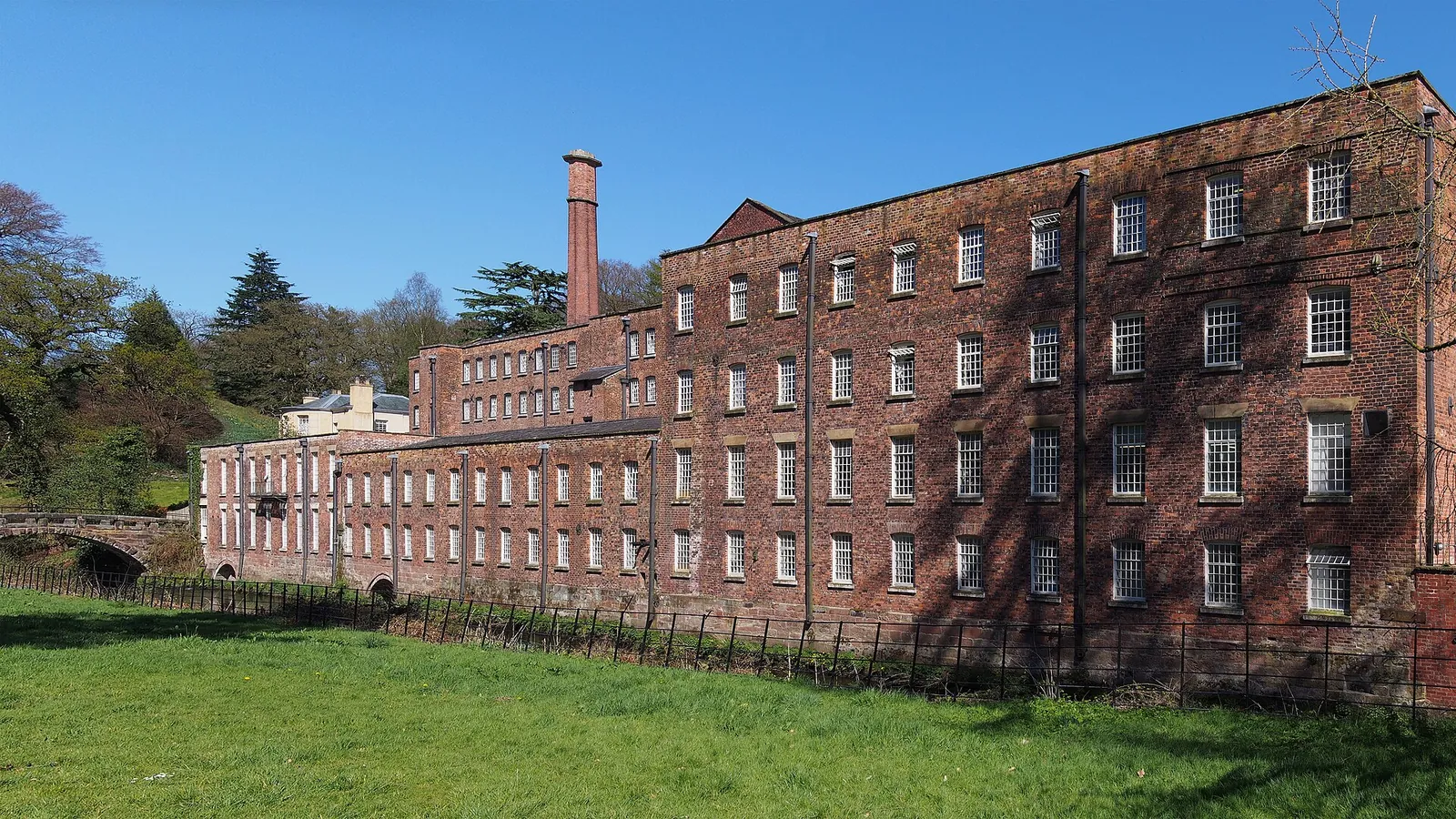
Quarry Bank Mill in Cheshire, England, opened in 1784. A water wheel turned machines that spun cotton thread far faster than spinning by hand. Much of the raw cotton came from plantations in the Americas worked by enslaved people, and the cloth was sold across the British Empire.
Photo: Quarry Bank Mill Styal by Francis Franklin, Wikimedia Commons, CC BY-SA 4.0