A waste study or a field study names what students change, what students measure, and what students keep the same. Respiration heat and a starch test connect the results to matter and energy.
About 25 min one-to-one, or 35 min with a small group
1. Warm up (5 to 10 min): Ask the quick questions with notes closed.
2. Teach: Work through the lesson slides in order.
3. Coach practice: Use the student examples and try-it tasks.
4. Check: Finish with the outcome prompts below.
Warm-up questions
How would tutors count the plants in a field without counting every one?Listen for: Use a quadrat sample. This sets up field study.
What could tutors measure to see if compost is working?Listen for: Temperature or mass loss. Listen for measurable variables.
Why keep some things the same in an experiment?Listen for: So the test is fair. This sets up controlled variables.
What to check they understood
Science skills: planning 3
Ask them to plan a waste study, naming the manipulated, responding and controlled variables.
A strong answer names the type of waste as manipulated, mass loss or temperature as responding, and amount, moisture and time as controlled.
D1.4
Ask them to explain why a compost pile warms up.
A strong answer says decomposers carry out respiration, which releases heat.
Science skills: analyzing 2
Ask them to interpret a starch test that turns blue-black on a leaf kept in light and stays brown on one kept in the dark.
A strong answer says blue-black means starch is present, so the leaf in light made food by photosynthesis.
Likely gaps from earlier grades
Students mix up manipulated and responding variables. Ask which one they change on purpose.
Class slides
Work through the class slides
1 / 7
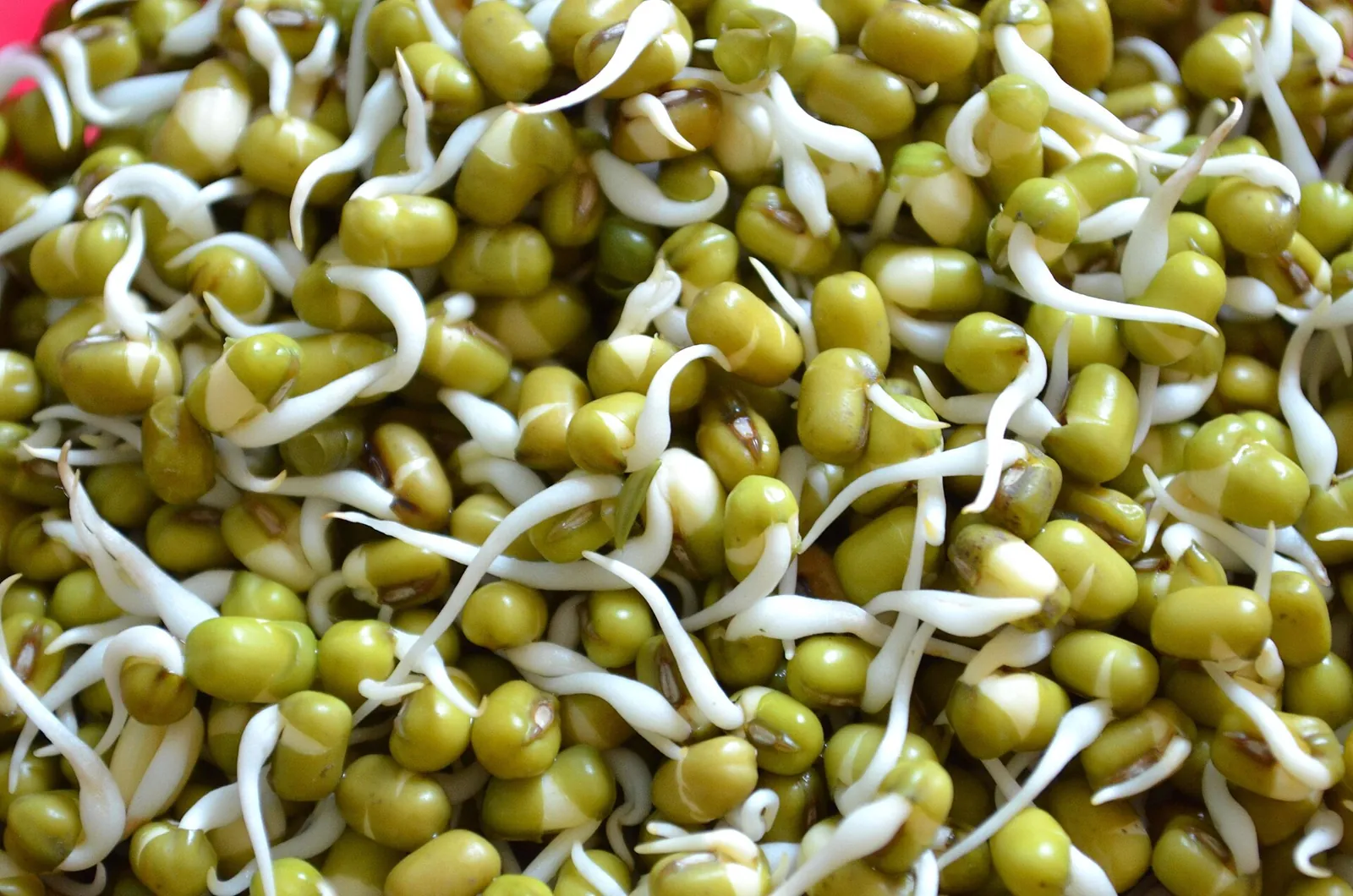
A warm jar of germinating seeds
Germinating seeds release some thermal energy as they respire.
A leaf kept in light can store energy as starch that an iodine test reveals.
Germinating mung beans. Each seed is respiring, breaking down its stored food to grow a sprout. That releases some thermal energy. A closed jar of sprouting seeds ends up a little warmer than a jar of dry seeds.