About 25 min one-to-one, or 35 min with a small group
1. Warm up (5 to 10 min): Ask the quick questions with notes closed.
2. Teach: Work through the lesson slides in order.
3. Coach practice: Use the student examples and try-it tasks.
4. Check: Finish with the outcome prompts below.
Warm-up questions
What happens to sugar when tutors stir it into tea?Listen for: It dissolves and spreads through. This sets up solutions.
Why does sugar dissolve faster in hot tea than iced tea?Listen for: Higher temperature lets more solute dissolve faster. Listen for temperature.
Which is the solute and which is the solvent in salt water?Listen for: Salt is the solute; water is the solvent. This checks vocabulary.
What to check they understood
A2.1
Ask them to explain the difference between solute, solvent and solution using a drink mix.
A strong answer names the powder as solute, water as solvent and the drink as solution.
A2.2
Ask them to calculate the concentration of 20 g of sugar in 0.50 L of water.
A strong answer divides 20 g by 0.50 L and gets 40 g/L.
A2.3
Ask them to describe how temperature affects how much solute dissolves.
A strong answer says most solids dissolve more in warmer water and gives an example such as sugar in hot tea.
Likely gaps from earlier grades
Students confuse dissolving with melting. Ask whether a second substance is involved.
Class slides
Work through the class slides
1 / 7
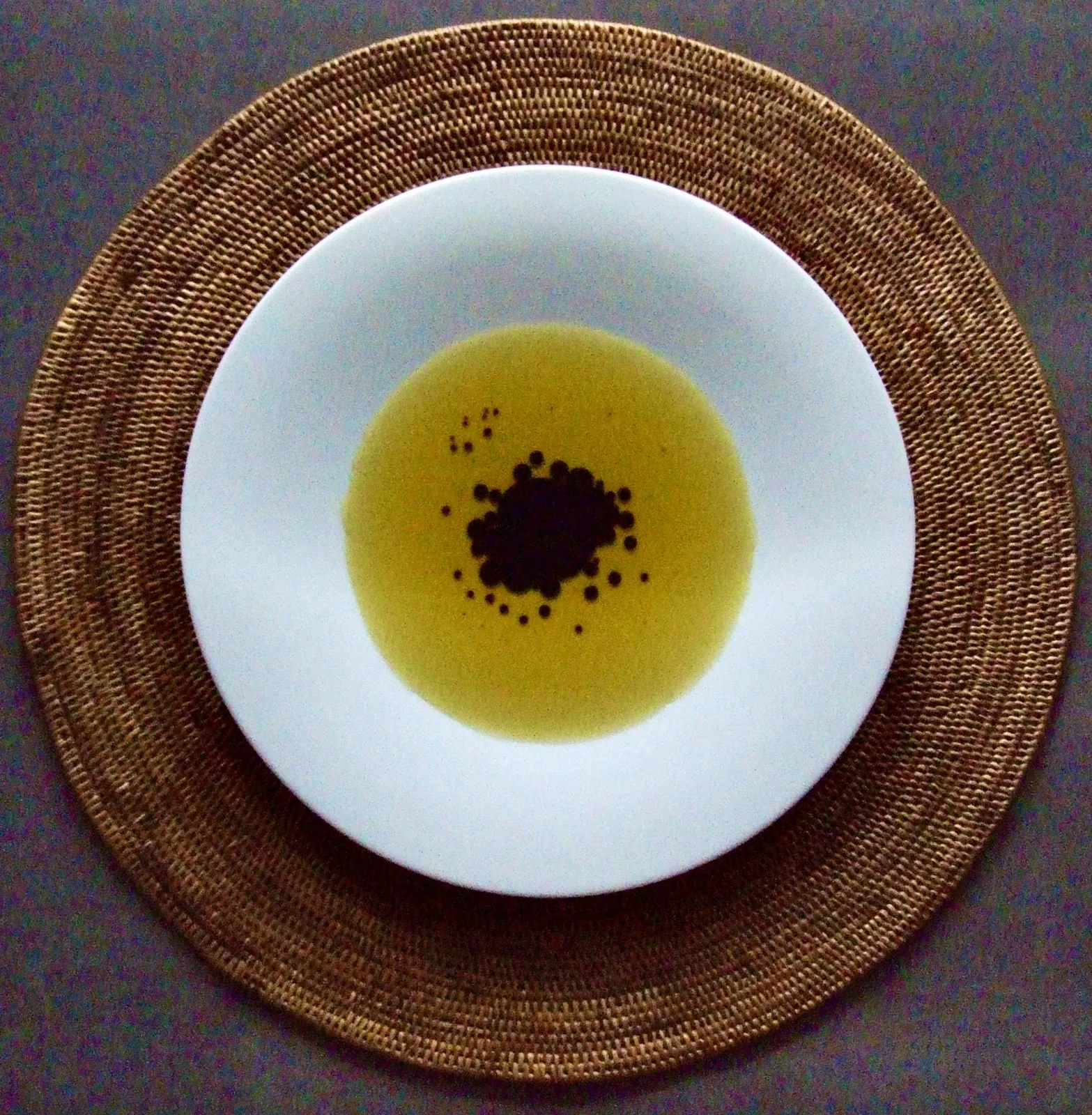
Vinegar mixes, oil forms a layer
Vinegar stirred into water becomes one liquid.
Oil stirred into water returns to a separate layer.
Vinegar poured onto olive oil stays as dark drops inside the golden oil. Vinegar is mostly water, and oil is insoluble in water, so the two liquids stay apart even after students stir them.