A pure substance is one kind of matter. A mixture holds two or more kinds, and household mixtures do jobs such as cleaning, cooking, and protecting engines.
About 25 min one-to-one, or 35 min with a small group
1. Warm up (5 to 10 min): Ask the quick questions with notes closed.
2. Teach: Work through the lesson slides in order.
3. Coach practice: Use the student examples and try-it tasks.
4. Check: Finish with the outcome prompts below.
Warm-up questions
Is orange juice with pulp one substance or several?Listen for: Several, so it is a mixture. This checks the core idea.
Is pure water from a lab a mixture?Listen for: It is a pure substance. Listen for one kind of matter.
Name a household mixture and the job it does.Listen for: Salad dressing, cleaner or motor oil. Any example works.
What to check they understood
A1.2
Ask them to sort salt, salad dressing, distilled water and air into pure substances and mixtures.
A strong answer puts salt and distilled water as pure substances and salad dressing and air as mixtures, with a reason for each.
A1.3
Ask them to explain how one household mixture does its job.
A strong answer names a mixture such as window cleaner and explains how its parts together clean, cook or protect.
Likely gaps from earlier grades
Students think anything clear is pure. Point out that salt water looks clear.
Class slides
Work through the class slides
1 / 7
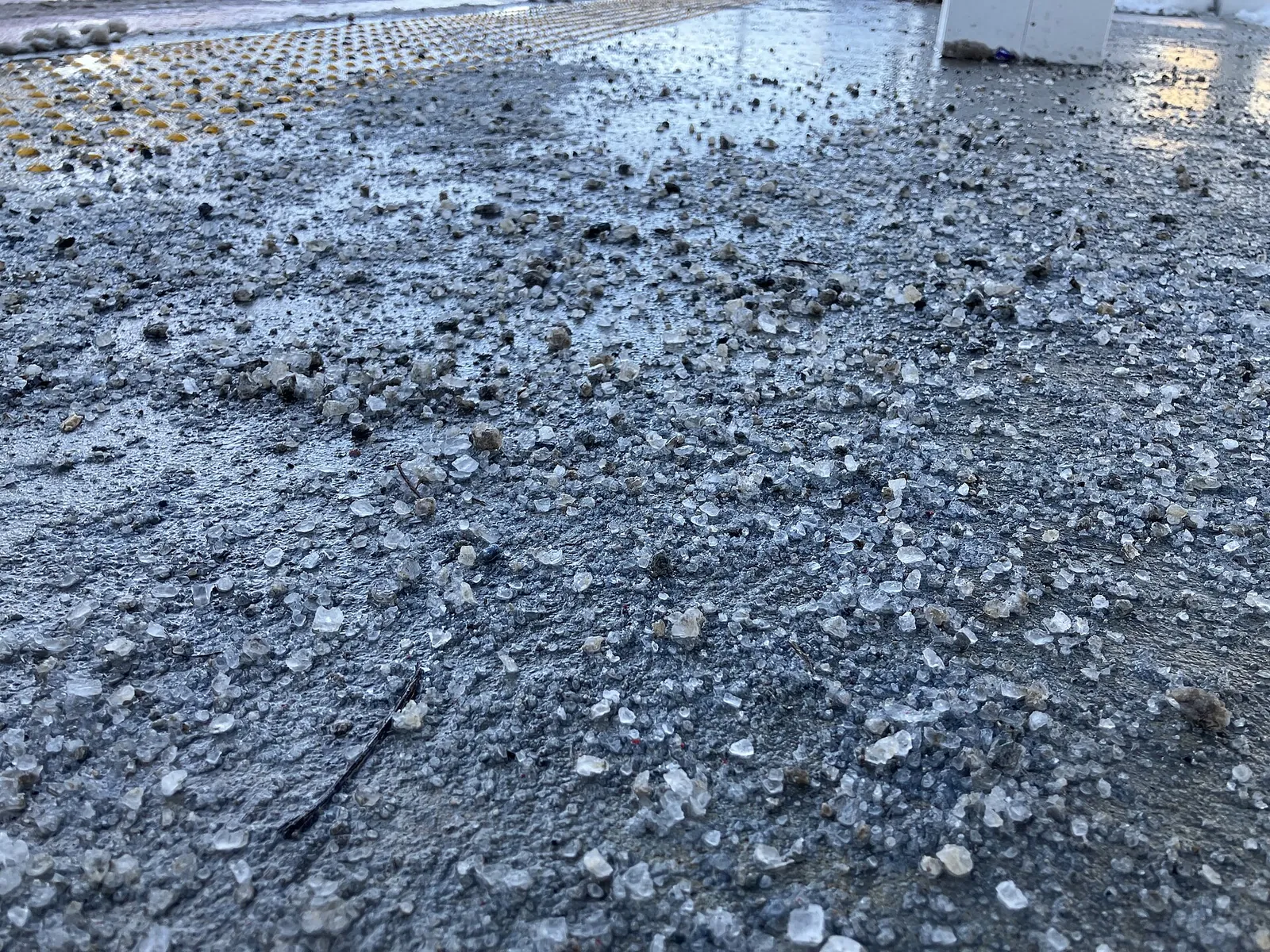
Salt on an icy Alberta road
Rock salt scattered on November ice changes how that ice behaves under tires.
The salt and the ice keep their own identities while they work together as a mixture.
Road salt spread on a sidewalk in London, Ontario. The salt dissolves in the thin layer of water on the ice. Salt water freezes at a lower temperature than pure water. The salt and the water each keep their own properties in the mixture.