About 50 min one-to-one, or 60 min with a small group
1. Warm up (5 to 10 min): Ask the quick questions with notes closed.
2. Teach: Work through the lesson slides in order.
3. Coach practice: Use the student examples and try-it tasks.
4. Check: Finish with the outcome prompts below.
Warm-up questions
A house plant on a windowsill leans toward the glass. Why?Listen for: It grows toward the light. Some will say it moves on purpose.
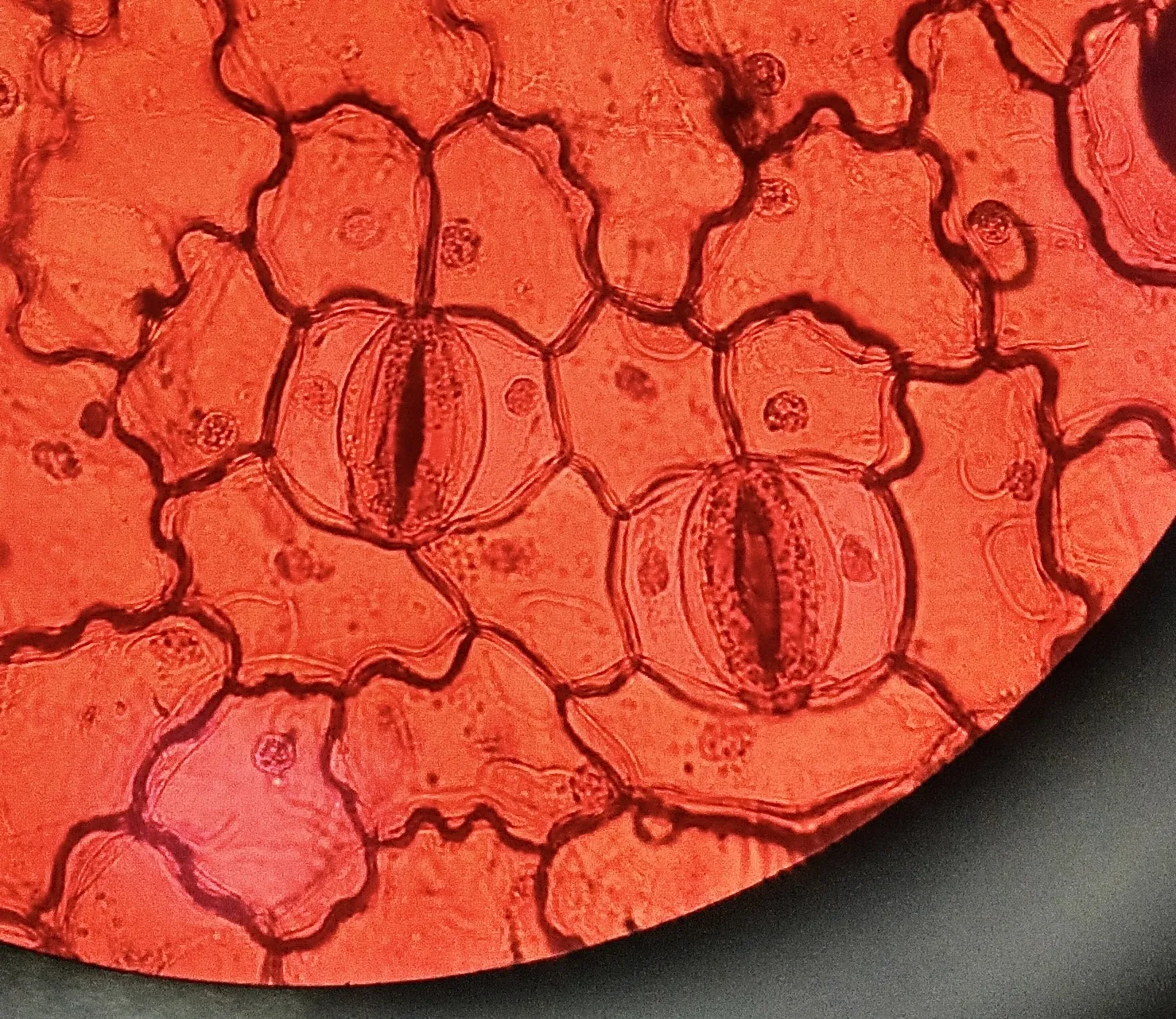
Do leaves pump gases in and out?Listen for: Gases move by diffusion and guard cells open or close the stomata. Many picture pumping.
Why might a plant close its stomata on a hot, dry afternoon?Listen for: To save water. This sets up the trade-off between gas exchange and water loss.
What to check they understood
C3.4
Ask them to explain the trade-off a plant faces when it opens its stomata.
A strong answer says open stomata let carbon dioxide diffuse in for photosynthesis but also let water vapour diffuse out.
C3.5
Ask them to name the tropism when a root grows down and a shoot grows toward a window.
A strong answer gives gravitropism for the root and phototropism for the shoot, and names gravity and light as the stimuli.
C3.6
Ask them to describe what Went added to the work of Darwin and Boysen-Jensen.
A strong answer says Went showed a chemical from the shoot tip causes the bending, by moving it into agar blocks, later named auxin.
Likely gaps from earlier grades
Diffusion from earlier in this unit is needed here. Ask for one example before talking about stomata.
Class slides
Work through the class slides
1 / 5
Stomata and water balance
Open stomata allow carbon dioxide to enter a leaf but also allow water vapour to leave.
Guard cells change shape to adjust the pore as water conditions and light change.
Each pore, called a stoma, sits between two bean-shaped guard cells. When the guard cells fill with water, they bend apart and open the pore. Carbon dioxide gets in, and water vapour gets out.