About 35 min one-to-one, or 40 min with a small group
1. Warm up (5 to 10 min): Ask the quick questions with notes closed.
2. Teach: Work through the lesson slides in order.
3. Coach practice: Use the student examples and try-it tasks.
4. Check: Finish with the outcome prompts below.
Warm-up questions
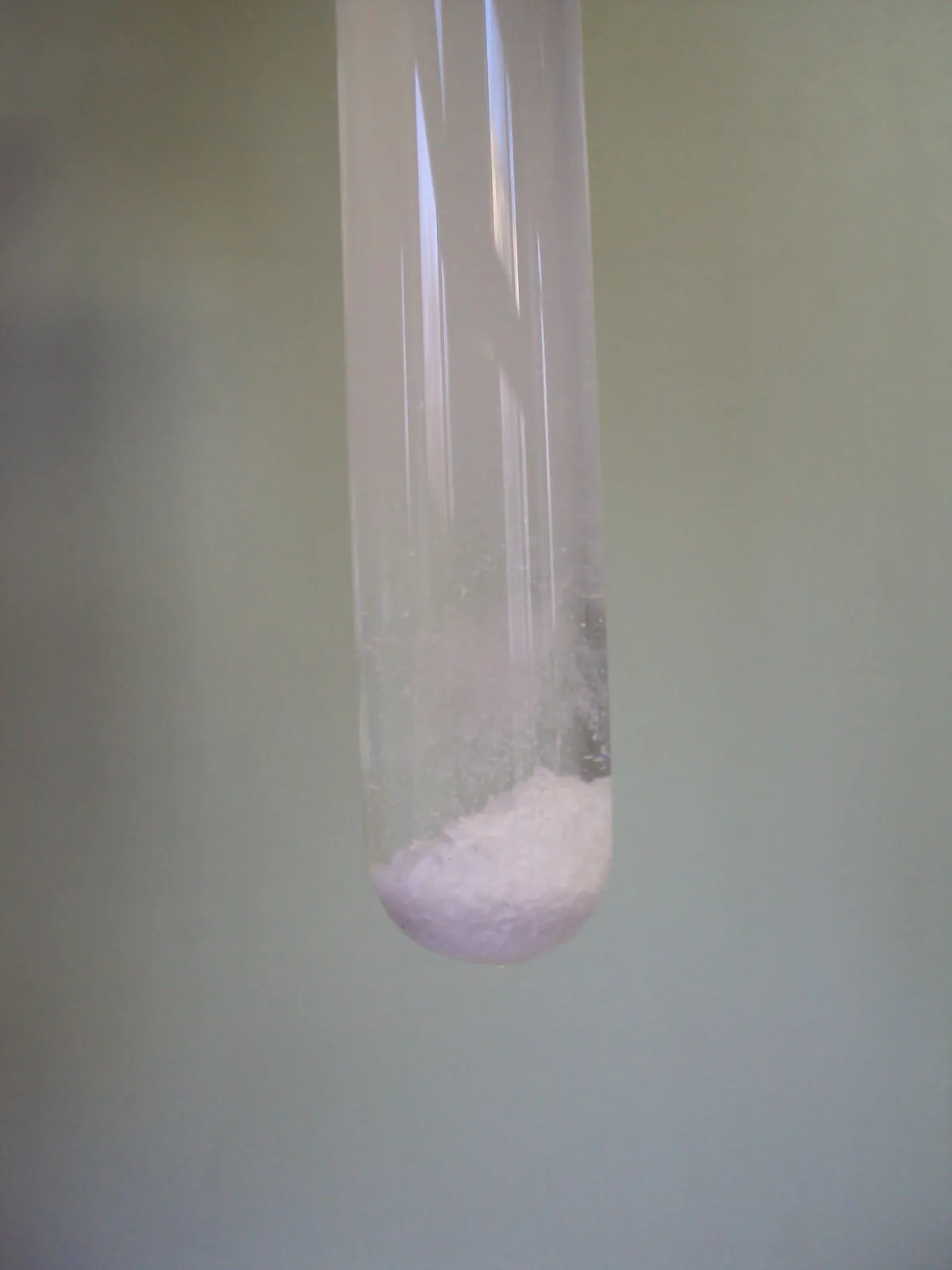
Two clear solutions mix and a white solid appears. What do tutors think happened?Listen for: A precipitate formed from ions joining. Listen for ions forming a new solid.
What does it mean for an ion to be a spectator?Listen for: It stays dissolved and unchanged during the reaction. This checks the idea.
Should tutors split a solid precipitate into ions in an equation?Listen for: Keep it together as a solid. Students who split it will make full ionic equations wrong.
What to check they understood
20-D1.4k
Ask them to write the full ionic and net ionic equations for silver nitrate solution reacting with sodium chloride solution.
A strong answer splits the dissolved compounds into ions, keeps AgCl(s) together, cancels Na⁺ and NO₃⁻ as spectators, and writes Ag⁺(aq) + Cl⁻(aq) → AgCl(s).
20-D1.4k
Ask them to explain why spectator ions are left out of the net ionic equation even though they stay in the beaker.
A strong answer says spectators appear unchanged on both sides, so the net equation shows only the ions that form the new substance, while the spectators remain dissolved in the liquid.
Likely gaps from earlier grades
Some students think spectator ions leave the beaker. They stay dissolved; they are only left out of the written change.
Class slides
Work through the class slides
1 / 6
A precipitate in solution
Two clear solutions can mix and produce a white solid while the liquid around that solid stays clear.
The solid is one new substance, and dissolved ions can remain in the liquid.
Silver nitrate solution added to a chloride solution forms this white solid, silver chloride. Only the silver ions and chloride ions join to make the solid. The sodium and nitrate ions stay dissolved, which is why they drop out of the net ionic equation.