About 45 min one-to-one, or 55 min with a small group
1. Warm up (5 to 10 min): Ask the quick questions with notes closed.
2. Teach: Work through the lesson slides in order.
3. Coach practice: Use the student examples and try-it tasks.
4. Check: Finish with the outcome prompts below.
Warm-up questions
Pondweed under a lamp gives off bubbles. What gas are they, and where did it come from?Listen for: Oxygen, split from water. Many students guess carbon dioxide; listen for water as the source.
Why are most leaves green?Listen for: Chlorophyll absorbs red and blue light and reflects green. Any idea of absorbing some colours and reflecting others is a strong start.
What happens to the bubble rate if tutors move the lamp farther away?Listen for: It slows, because less light reaches the plant. This shows whether they link light to the rate.
What to check they understood
C1.1
Ask them to describe what happens in the thylakoid when light hits it, naming what goes in and what comes out.
A strong answer says pigments absorb light, water is split and releases oxygen, and the energy is stored in ATP and NADPH for the next stage.
C1.5
Ask them to design a pondweed test of light intensity, naming the manipulated, responding and controlled variables.
A strong answer names lamp distance as manipulated, bubbles per minute as responding, and water temperature, plant size and time as controlled, and predicts more bubbles closer to the lamp.
Likely gaps from earlier grades
Students often think glucose is made directly in the thylakoid. Separate the two stages: the light reactions make ATP and NADPH; sugar is built later in the stroma.
Class slides
Work through the class slides
1 / 7
Oxygen from pondweed in light
Pondweed under a bright lamp releases a string of bubbles.
Move the lamp away and the string slows.
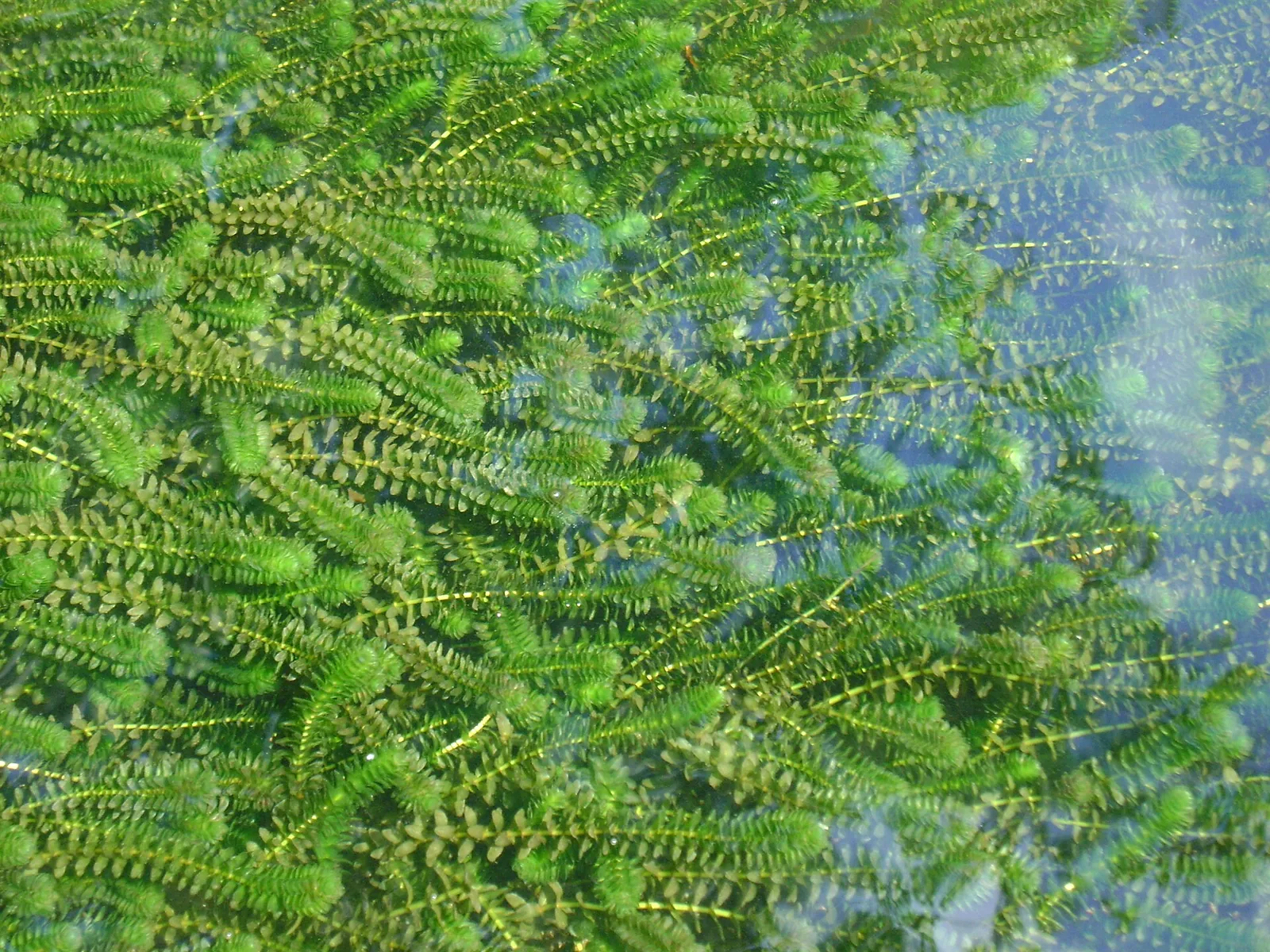
Canadian waterweed, Elodea canadensis, is the pondweed used in many bubble experiments. Its leaves are only two cells thick, so light reaches the chloroplasts easily. Under a bright lamp, oxygen from split water leaves a cut stem as bubbles students can count.